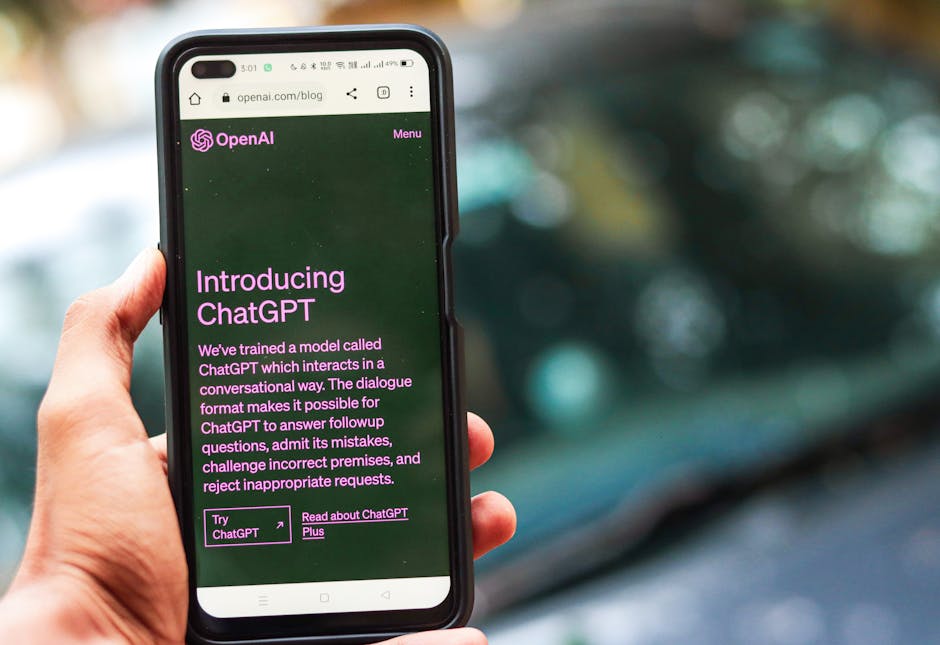
The era of broad targeting and generic ad messages is irrevocably fading. Today's B2B market demands hyper-personalization, but how can it be achieved at scale without overwhelming your sales and marketing teams? The answer lies in generative artificial intelligence – an innovation that redefines how we identify, understand, and engage with ideal customers on social media. Forget static buyer personas; get ready for dynamic, data-driven profiles that evolve in real-time, ensuring unprecedented accuracy in lead generation.
This article will immerse you in a world where generative AI becomes your main ally in building an effective targeting strategy. We'll explore how this technology transforms customer persona creation, enables the generation of highly relevant content, and scales lead generation, ensuring a steady stream of qualified leads for your B2B business.
What is Generative AI and How Is It Changing Targeting?
Generative AI is a class of artificial intelligence capable of creating new, original content: text, images, code, and even video. In the context of marketing and sales, this means not just analyzing existing data, but the ability to predict and shape behavioral patterns, and generate unique ideas for personas and messages.
For targeting, this is a breakthrough. Instead of manually building an averaged ideal customer profile, AI creates thousands of detailed micro-personas. Each reflects unique characteristics, needs, and pain points. This allows not only for more precise audience identification but also for "speaking" to them in their own language, offering solutions that hit the mark precisely. The result? A significant increase in communication relevance and, consequently, higher conversion rates.
Step 1: From "Outdated" Profiles to "Living" Personas with AI
Deep Data Analysis Without Limits
Traditional audience analysis is often limited to available demographic data and general interests. Generative AI expands these horizons by processing vast arrays of unstructured data from social media: posts, comments, reactions, group participation, even communication tone. Based on this data, AI not only identifies patterns but synthesizes complete profiles that describe not just "who" your customer is, but also "why" they make certain decisions and "what" their hidden needs are.
Imagine creating a detailed profile not just of a "B2B marketer," but of a "B2B marketer actively interested in AI tools for LinkedIn outreach automation, struggling with sales scalability, and looking for ready-made touchpoint scenarios." This is the level of detail that becomes accessible thanks to generative AI.
Creating Dynamic Profiles and Micro-Segments
The key difference of AI personas is their dynamism. They are not static files created once and for all. Generative AI constantly monitors changes in audience behavior and interests, updating profiles in real-time. This allows not just for reacting to trends, but for anticipating them.
For example, if AI notices that a group of potential clients is showing increased interest in data protection, the system automatically updates their personas, adds this interest, and suggests new communication scenarios. Tools like SOCMASTER allow you to effectively parse audiences from Facebook groups, Instagram followers, or LinkedIn search results based on such deep analysis, and then organize them into dynamic lists for further engagement.
Step 2: Crafting Unique Messages for Each AI Persona
Automated Generation of Highly Relevant Content
Once AI has formed detailed personas, the next task is to create messages that will "resonate" with each one. Generative models, such as Google Gemini, integrated into platforms like SOCMASTER, can automatically generate personalized texts for cold outreach messages, follow-up emails, or even social media posts. They consider not only the interests and pain points but also the preferred communication style of each persona.
This is not just simple name insertion; it's creating an entire dialogue that feels natural and targeted, whether it's a message on LinkedIn, Instagram Direct, or Telegram chat. This approach significantly increases the likelihood of a response and the initiation of productive interaction.
Personalization at the Micro-Segment Level
Traditional tools allow audience segmentation by several parameters. Generative AI takes this to the micro-segment level, creating messages that account for even subtle nuances. For instance, for one segment of marketers, AI might suggest an article on increasing ROI in Facebook Ads, while for another similar segment focused on "organic traffic," it would generate a guide on getting leads from social media without ads. This multiplies response rates and communication effectiveness, as each message is perceived as being written specifically for that individual.
Step 3: Testing, Optimization, and Scaling with AI
Rapid A/B Testing of Hypotheses
Sales and marketing processes always require testing. With generative AI, this reaches a new level. The system can independently generate dozens of variations for headlines, opening lines, or CTAs for the same persona. It then automatically runs A/B tests, analyzes the results (rate of response, conversion to the next stage), and selects the most effective options. This reduces testing cycles from weeks to hours, allowing the team to continuously improve its strategies.
Continuous Learning and Adaptation
AI doesn't just execute tasks; it learns. Every interaction with a potential client, every response, every conversion becomes a new data point for the model's training. This means that over time, AI personas become more accurate, and the generated messages become more effective.
Platforms that include CRM and a messenger for all conversations in one window, like SOCMASTER, allow you to track every step of the funnel, providing AI with invaluable data for further optimization. This feedback loop ensures that your targeting strategies are constantly improving, adapting to changing market conditions and audience behavior.
Key Elements of an AI Persona:
- Demographics: Age, gender, location (as a starting base).
- Professional Data: Job title, industry, company size.
- Pain Points: Specific problems the client aims to solve.
- Goals and Ambitions: What they want to achieve in the short and long term.
- Information Sources: Which social media, groups, and media they consume and trust.
- Communication Preferences: Format, tone, optimal time for contact.
- Behavioral Patterns: How they interact with content and others on social media.
- Hidden Interests: Identified by AI based on deep analysis of text data.
Ready to Elevate Your Lead Generation?
Integrating generative AI into your targeting and sales strategy isn't the future; it's the present. SOCMASTER offers comprehensive solutions for B2B companies, enabling you to create AI personas, automate personalized outreach, and scale your lead generation. Start attracting relevant clients from social media today.
Get 365-Day Access to SOCMASTER and transform your sales approach!
Mistakes to Avoid When Working with Generative AI and Personas
Implementing generative AI in your targeting process unlocks immense possibilities, but it also comes with certain risks. By avoiding these common mistakes, you can maximize the effectiveness of new technologies:
- Ignoring Human Oversight: AI is a powerful tool, but not a substitute for human expertise. Always double-check generated personas and messages, especially at the beginning. Otherwise, there's a risk the system may drift into irrelevant or even incorrect directions, damaging your reputation.
- Expecting Instant "Magic" Results: Generative AI requires training and adaptation. Don't expect it to deliver 100% perfect personas and conversions right away. It's an iterative process that requires time, patience, and constant adjustments to achieve optimal results.
- Over-automation Without Strategy: Much can be automated, but without a clear strategy and understanding of your business goals, AI will simply generate "noise." Define which metrics are important and what specific outcomes you're aiming for before scaling automation.
- Insufficient Segmentation: Even with AI, attempting to create "one" universal persona is a flawed idea. Utilize AI's capabilities to create the most detailed micro-segments possible to address the unique needs of each customer group.
- Ignoring Ethical Considerations: Always remember data privacy and the ethics of AI usage. Avoid manipulative content and ensure your practices comply with legislation (e.g., GDPR). Audience trust is an invaluable asset.
- Lack of Integration: Disconnected AI tools will perform significantly worse than an integrated system. For maximum efficiency, AI tools should be connected to your CRM, messengers, and analytics tools, as implemented in SOCMASTER. You can learn more about how AI integrates into sales in our article.
How SOCMASTER Helps Implement Generative AI in Your Targeting
SOCMASTER is designed to simplify and automate the social media client acquisition process as much as possible, integrating cutting-edge AI technologies into a unified platform:
- Audience Parsing: With SOCMASTER, you can parse data from Facebook groups, Instagram followers, LinkedIn search results, Telegram, and Reddit. This is the foundation upon which generative AI builds its detailed personas. The system collects publicly available data, allowing you to gain a deep understanding of target segments.
- Account Warming in the Background: Our tools allow for safe account warming, simulating human behavior, which is critical for subsequent personalized outreach.
- AI Assistant in Correspondence (powered by Google Gemini): Our AI assistant handles the routine of creating personalized messages and replies. It analyzes the conversation context, client profile, and even generates response options consistent with your communication style. This significantly speeds up account warming and increases the effectiveness of cold outreach.
- Scenarios and Touchpoint Templates with Branching: SOCMASTER allows for the creation of complex yet intuitive interaction scenarios. These scenarios can be dynamically adapted by generative AI based on persona behavior, ensuring the most relevant customer journey through the funnel.
- CRM with Funnel Stages and Follow-up: The built-in CRM records every interaction and every funnel stage. This data becomes "fuel" for AI, which constantly learns and suggests optimal follow-up times, as well as adjusts personas based on real results.
- Messenger for All Conversations in One Window: Consolidating all chats from different social networks into a single window allows the AI assistant to see the complete picture of client communication, offering more accurate and context-dependent responses, which significantly improves the customer experience.
Conclusion
Generative AI is opening a new era in targeting and lead generation, enabling B2B companies to achieve a level of personalization that was previously unimaginable. From creating dynamic AI personas to automatically generating hyper-relevant messages, these technologies are transforming sales and marketing. By integrating solutions like SOCMASTER, you are not just following trends; you are shaping the future of your business, ensuring a steady stream of qualified leads and scalable growth. Start leveraging the power of generative AI today and get ahead of the competition.